Home Office Accessories Checklist: 12 Useful Buys (and What to Skip)
October 09, 2026
Working from home has a way of exposing bad furniture. The kitchen table holds up for a fortnight, then the laptop ends up balanced on a stack of cookbooks and your shoulders start complaining. Sooner or later the desk question arrives: fixed, or height-adjustable?
Neither wins outright. In a British home, the deciding factors are usually the size of the room, whether anyone else shares it, how much equipment you need to house, and whether you will genuinely change position through the day. Here is how to work that out before you spend anything.
Start with a tape measure, not a browser tab. Note the wall length you can use, the depth available, the height of the windowsill, the position of radiators and sockets, and which way the door swings.
Spare bedrooms are usually the culprit. A second bedroom of roughly 2.4m by 2.7m will take a 120cm desk on the longest wall with room to spare, but a 160cm desk against the shorter wall can leave you shuffling sideways to reach the wardrobe. Alcoves beside a chimney breast are excellent for a fitted fixed desk and awkward for a standing one, because you need space to step back and push a chair clear when the desk rises.
Two practical checks:
A fixed desk with four solid legs and a decent frame does not move. Ever. That matters if you use a heavy monitor arm, write by hand, or lean on the edge while thinking.
Height-adjustable desks have improved enormously, but physics has not gone anywhere. A desk raised to 110cm on a single motor and thin two-stage legs will wobble more than the same frame at sitting height. What reduces it:
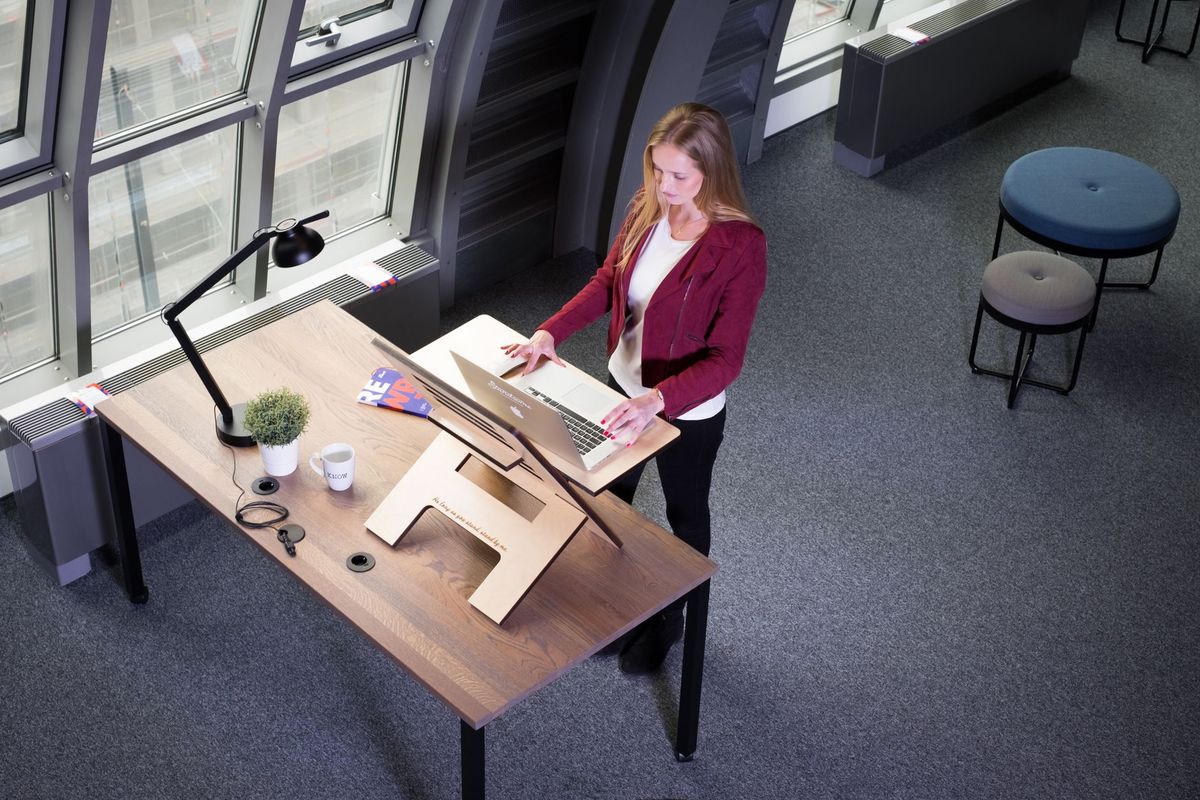
If you already own a fixed desk you like, a sit-stand converter that sits on top is a cheaper way to test whether you enjoy standing. They are not elegant and they eat desk depth, but they answer the question quickly.
Fixed desks win on storage. You can order fitted alcove joinery with drawers, or build a run of kitchen worktop on legs and slide filing boxes underneath. Cable management is simpler when nothing moves: a tray screwed under the top, a few cable ties, done.
Height-adjustable desks need slack in the cables, because every rise pulls them. Leave a loop behind the desk, use a tray that travels with the top, and keep a little clearance from the wall. Check the height range too — this is the specification people forget. Some frames stop at around 72cm at their lowest, which suits someone around 175cm and is too high for a much shorter user, who then needs a footrest. At the other end, taller users need the top to reach roughly elbow height when standing, so look at the maximum, not just the minimum.
A fixed desk is usually the cheapest route to a large, solid surface. Standing desks cost more because you are paying for motors, controls and stiffer steel. That extra money buys convenience, not sturdiness — a basic fixed desk often feels more rock-solid than an electric one costing several times as much.
Where cheap standing desks cut corners: noisy motors, plastic gears, tops that arrive in two halves, and thin warranty cover on the electrics. When comparing, read the warranty terms for the frame and the motor separately, and check the weight limit with the top included. If the desk will hold two monitors, a laptop and a printer, add it all up before ordering.
Standing all day is not the goal, and it is not automatically healthier than sitting all day. The useful habit is changing position regularly — sitting for a stretch of focused work, standing for calls and reading, then sitting again. A height-adjustable desk makes that switch easy. A fixed desk makes it harder, though standing up for a phone call and walking to the kettle does some of the same work.
Whichever you choose, set the screen so the top of it sits roughly at eye level, keep elbows near a right angle when seated, and put the keyboard close enough that you are not reaching. An anti-fatigue mat helps if you stand for long spells on a hard floor.
If you have an existing back, hip, knee or circulation problem, or you are pregnant, speak to your GP or a physiotherapist before changing how you work for hours at a time. General advice about desks is no substitute for advice about your own body.
Work through these in order and the answer tends to appear on its own:
A fixed desk is the sensible, affordable choice for a small spare room where you mainly sit and want storage underneath. A standing desk earns its place if you take a lot of calls, get restless, or work long days and want the option to move without leaving your work. Buy for the room you have and the working day you actually have, and either type will serve you well for years.
Previous Post
How to Choose the Right Desk Height for Your Home Office (with UK Average Heights)
Next Post
Small Home Office Desk Buying Checklist: 10 Things to Check Before You Buy