
Small Home Office Desk Buying Checklist: 10 Things to Check Before You Buy
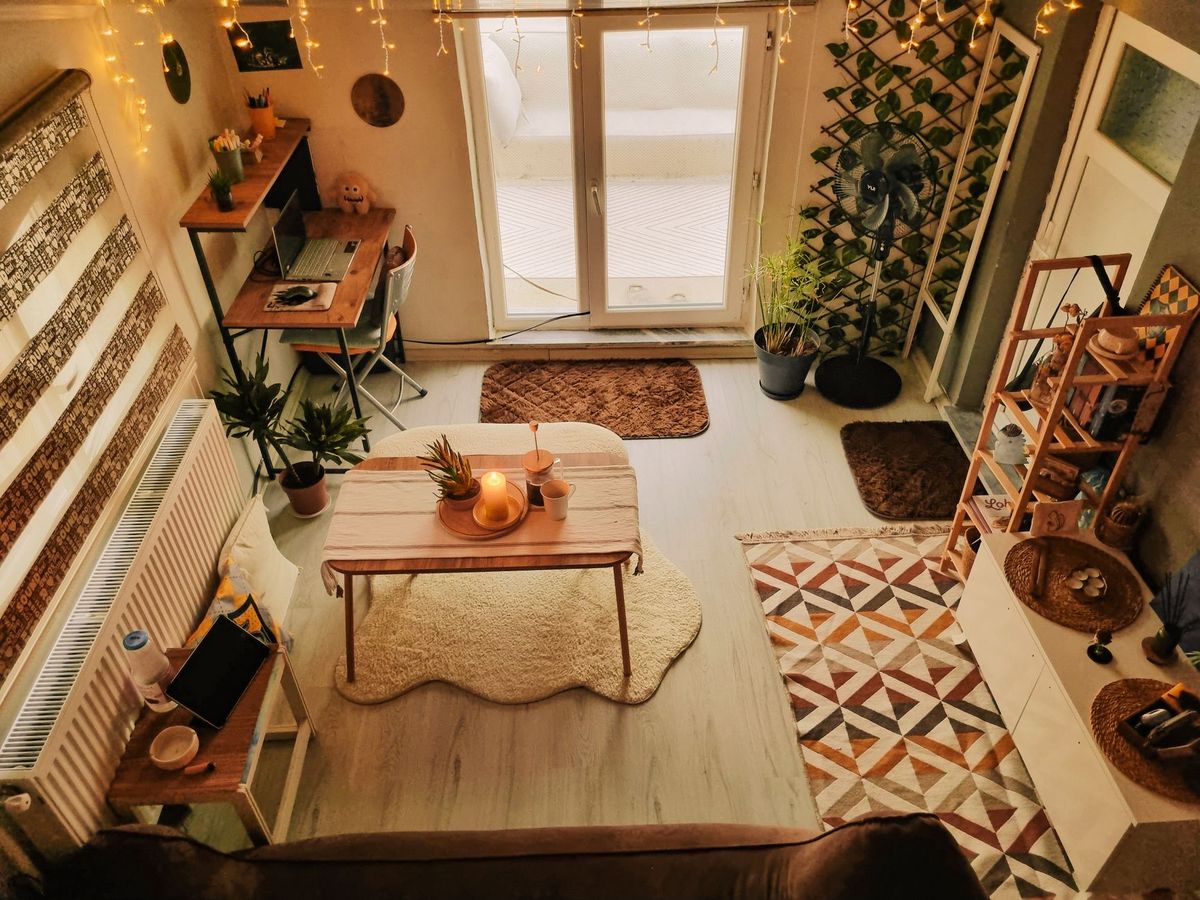
A desk is the one piece of home office furniture you cannot really fudge. Chairs can be swapped, lamps moved, shelves added later. But a desk that is 10cm too deep, or that blocks the only socket, or that cannot make it up your stairs, will sit there annoying you for years. In a small room the margins are tight, so a few minutes with a tape measure and a sceptical eye on the product listing saves a lot of grief.
1. Measure the room, not just the wall
Start with what is actually usable. Skirting boards, radiators, window sills, curtain drop, plug sockets and door swings all nibble into the space you think you have. If a door opens into the room, mark its swing with tape on the floor and see whether it clears the desk chair.
Measure the same gap at three heights: at floor level, at roughly 74cm (desk height), and above the desk where a monitor or shelf will sit. Walls lean, bay windows curve and chimney breasts jut out, so a gap that measures fine at the skirting can be 5cm narrower higher up.
Then think about the chair. You need enough room to push back and stand up without shuffling sideways past a bed. Measure your doorway, hallway and stair width too, and check any tight turn at the top of the stairs. A flat-pack desk in a long box is far easier to manoeuvre than a pre-assembled one.
2. Depth, height and knee clearance
Depth is the measurement people forget, and it matters more than width in a small room. Around 60cm gives you a comfortable gap between your eyes and a monitor; 50cm is workable if you use a laptop or a wall-mounted screen. Anything deeper eats floor space you will miss every day.
Height-wise, most desks sit between 72cm and 75cm. That suits many people, but not all. If you are notably tall or short, a height-adjustable desk or an adjustable chair with a footrest will be easier to live with than a fixed top that leaves your shoulders hunched or your feet dangling. If you have ongoing aches or a diagnosed condition, it is worth speaking to a physiotherapist or your employer's occupational health team rather than guessing.
Knee clearance is the quiet dealbreaker. Aim for at least 60cm of width and 60cm of height under the top with nothing in the way. Check where the drawer units sit, whether there is a crossbar between the legs, and how far the frame intrudes. A desk with a full-width drawer under the top can leave you nowhere to put your knees.
3. Cable ports, power and cable routing
Count your plugs before you buy. Monitor, laptop charger, desk lamp, phone charger, speakers, printer. That is often five or six, and most small rooms have a double socket in the least helpful corner.
- Ports and grommets: a cable cut-out or grommet keeps monitor and lamp leads tidy and stops them dragging across the desktop.
- Cable trays: a tray or channel under the top hides extension leads and keeps chargers off the floor.
- Socket position: check whether the desk will cover your existing sockets. A low back panel can block access entirely.
- Safety: never run leads across a walkway or under a rug where they can overheat. If you need extra sockets, ask a qualified electrician.
4. Storage that earns its keep
In a compact room, storage is a trade-off against legroom and floor space. One shallow drawer is often more useful than two deep ones: it holds pens, cables, a notebook and a charger without turning into a filing cabinet. Deep drawers are heavy, cost more and reduce knee clearance.
Think vertically instead. A desk with a small top shelf, or a wall shelf at 120cm to 140cm above the floor, gives you somewhere for books and a printer without taking floor space. Before you pay extra for drawers, be honest about what will go in them. If the answer is "things I have not sorted since 2019", buy the simpler desk.
5. Materials and build quality
Most desks under a few hundred pounds are built from a metal frame and either solid wood, MDF or a honeycomb-core board with a veneer or laminate finish. The frame matters as much as the top. Thicker legs, welded joints and a brace or crossbar are what stop a desk wobbling when you type.
If you plan to fit a monitor arm, check the top's thickness and construction. Clamped arms need a solid, thick top, and can crush a hollow-core board. Look for a stated weight capacity and compare it with your monitor plus anything else on the desk. Near a radiator, laminate edges can lift over time, so keep the desk a sensible distance away and wipe spills promptly. Lighter finishes bounce light around small rooms; matte surfaces hide dust better than gloss.
6. Assembly, delivery and returns
Read the assembly notes before ordering. Flat-pack desks typically take 30 to 90 minutes, and some steps genuinely need two people. Check the boxed dimensions and weight against your stair, lift and doorway, not just the assembled size.
Then look at the returns policy as carefully as the product photos. Confirm the return window, who pays return postage, whether a collection fee applies, and whether assembled or part-assembled items are excluded. Many retailers insist on original packaging, so keep the box and inserts until you are certain. Check the warranty length and whether spare parts, such as a replacement leg or fitting set, can be ordered separately.
Before you click buy
Run through this list one last time. It takes five minutes and prevents most of the regret.
- Tape the desk's footprint on the floor and live with it for an evening.
- Confirm at least 60cm of knee width and height with nothing obstructing.
- Check the desk will not cover your sockets, and count your plugs.
- Measure the box against your stairs and doorways.
- Read the return window and the exclusions.
- Keep the packaging until the desk is built and you are happy with it.
Get those six right and the rest, from finish to drawer layout, becomes a matter of taste rather than a daily compromise.
Photo: Talha Kuğu / Pexels