
Under-Desk Storage Ideas That Won't Crowd Your Legroom
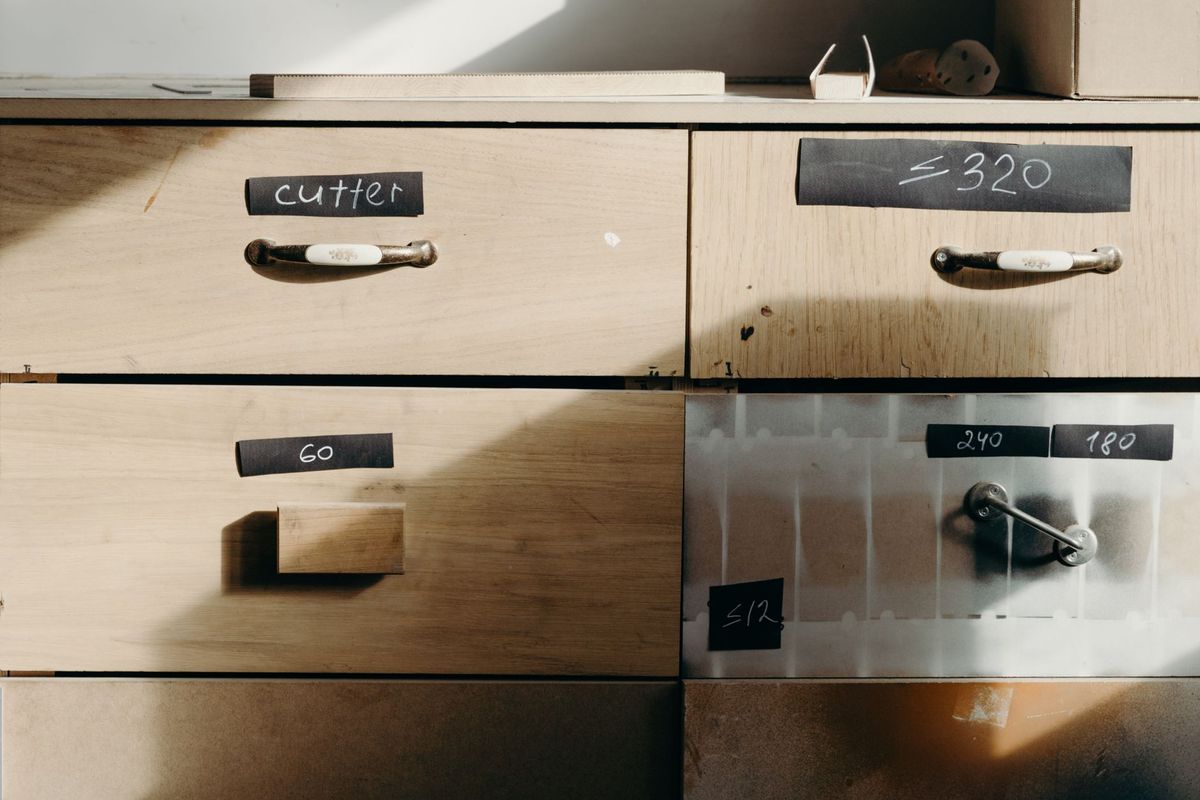
Under-desk storage has a habit of solving one problem and creating another. The clutter disappears, and then you spend every working day sitting at an angle because a plastic crate is pressed against your shins. Knee room is the first thing people sacrifice and the thing they miss most.
The answer isn't to go without storage. It's to choose storage shaped around the space your legs actually need: slim, shallow and fixed where your feet never travel. Here's how to work out what fits, and where to put it so you forget it's there.
Measure Your Knee Space Before You Buy Anything
Three numbers tell you almost everything. The clear height from floor to the underside of the worktop. The width of the knee well between the desk legs, pedestals or side panels. And the depth from the front edge back to the wall or the desk's own back rail.
As a rough guide, most adults want around 60cm of clear height, width and depth to sit comfortably, though your chair and your leg length matter more than any rule. Take the measurements with your chair in its normal working position, because that is the setup you're protecting.
The two zones under a desk
Once you have the numbers, split the space in two:
- The live zone. The arc where your feet, knees and thighs move as you sit, shuffle and stand. Nothing lives here, not even something flat.
- The dead zone. The narrow strip along the back edge, and the outer corners either side of the knee well. This is where storage earns its place.
Almost every storage mistake comes from putting something in the first zone because it was the only gap left.
Slim Drawers That Slide Out of the Way
Drawers beat boxes because they keep their contents reachable without a shuffle on the floor. The trick is travel. A drawer that pulls out 35cm into the middle of your knee well will meet your legs every time you open it, so choose drawers that open sideways from the outer corners, or shallow trays mounted under the worktop and set back at least a hand's width from the front edge.
Under-desk pencil drawers, usually 5–8cm deep, are ideal for pens, notebooks, chargers and the small items that otherwise colonise the worktop. If you prefer a rolling pedestal, go narrow, around 30 to 40cm, and check that its castors don't fight with your chair's castors. Wheeled units that drift are worse than fixed ones, so look for brakes or accept that a static unit stays put.
Shelves That Hang Rather Than Stand
Floor-standing shelving under a desk is the biggest single cause of lost legroom. Anything standing on the floor has a footprint, and that footprint usually lands in the live zone. Hang storage off the desk itself, or the wall behind it, instead.
- Clamp-on side shelves that grip a desk leg give you a small platform for a notebook, a drink or a phone without touching the floor.
- A wall shelf at the back of the desk, set just above worktop height, takes the things you want within reach but not underfoot.
- A slim back-edge ledge along the rear of the worktop handles stationery and a small tray of cables.
- A hook or hanging rail on the desk end keeps bags and headphones off the floor and out of your way.
Fixing methods, and their limits
Clamps need a flat, straight section of leg and enough clearance to tighten. Screw-fixed brackets are the most secure, but check for cables and frame tubes before you drill, and use pilot holes in chipboard or veneer. Adhesive pads are fine for a light plastic tray. Don't trust them with a loaded shelf, a heavy charger block, or anything sitting above a radiator or in strong sunlight.
Cable Trays Do Double Duty
A steel basket tray bolted under the rear edge of the desk is the best value storage in a home office. It gets the extension lead, laptop charger and router off the floor and out of the sweep of your feet, and it tidies the cables in the same move.
Mount it as far back as the desk allows and keep it shallow, around 10 to 15cm, so it never encroaches on knee height. Route cables with hook-and-loop straps rather than zip ties, which you'll have to cut the moment you change anything. If your desk rises and falls, check the cable run at full height before you tidy anything permanently; the most common failure on a sit-stand desk is a power lead that's fine when seated and pulled tight when raised. Don't overload sockets or chain extension leads together. One correctly rated lead per desk is sensible, and if you're unsure about the load or the wiring, ask a qualified electrician.
The Items People Forget to Plan For
Some under-desk residents aren't storage at all, but they take up the same room:
- A bin. Choose a slim one that hangs from the side of the desk or a leg, and test it by rolling your chair in and out.
- A footrest. If you use one, it owns part of the live zone. Nothing else can share that floor.
- A bag. Hang it from the desk end. Bags on the floor get kicked, tripped over and quietly filled with dust.
- A printer. Put it on a unit to the side or behind you. Crawling under a desk to change paper is a chore you'll avoid for months.
Habits That Keep the Space Working
- Keep the middle third of the knee well completely clear, and use the outer thirds for drawers and trays.
- Nothing deeper than about 15cm should sit below the underside of the desk in the leg line.
- Store only what you use weekly. Archive boxes, spare paper reams and old files belong elsewhere.
- Leave a visible gap between drawer fronts and your knees with the chair pushed fully in.
- Re-check every few months. Under-desk clutter reappears the moment there's a spare centimetre.
A Ten-Minute Test Before You Buy
Photo: cottonbro studio / Pexels